The Top 5 Replica Omega Watches UK From The 1990s
The 1990s were an unusually important decade for Omega. The brand was moving away from the uncertainty that had affected much of the Swiss watch industry during the previous years, while at the same time introducing watches that felt noticeably more modern in their construction, bracelets and everyday usability.
For many people in the UK, this period is also where some of the most recognisable modern Omega designs really began. The blue Seamaster became closely associated with James Bond, the Moonwatch continued to evolve without losing its familiar shape, and Omega was willing to experiment with watches such as the digital and analogue Speedmaster X-33.
That history matters when looking at Omega replica watches UK today. A convincing recreation is not simply about placing an Omega-style logo on a familiar dial. The watches from this decade depend heavily on proportions, bezel shape, bracelet construction, hand length and small details that are surprisingly easy to get wrong.
These are five 1990s Omega references that remain especially useful points of comparison.
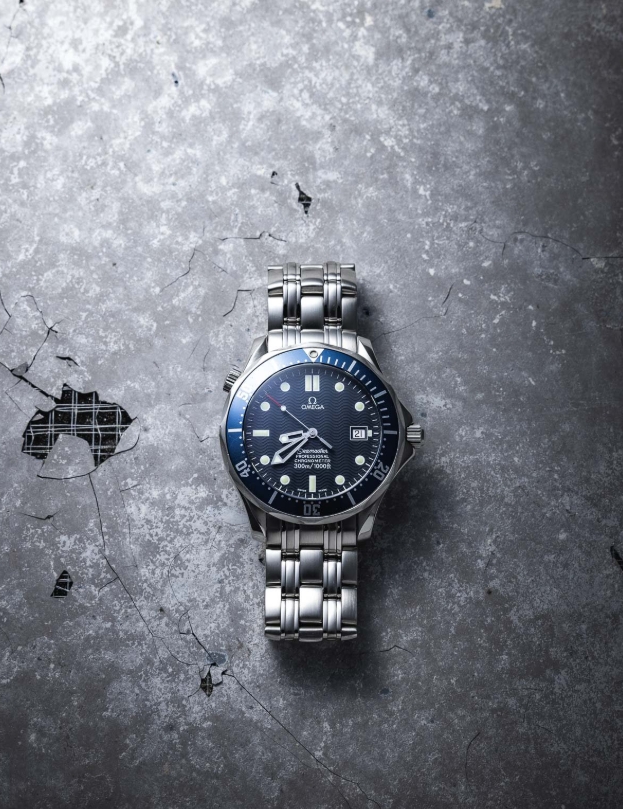
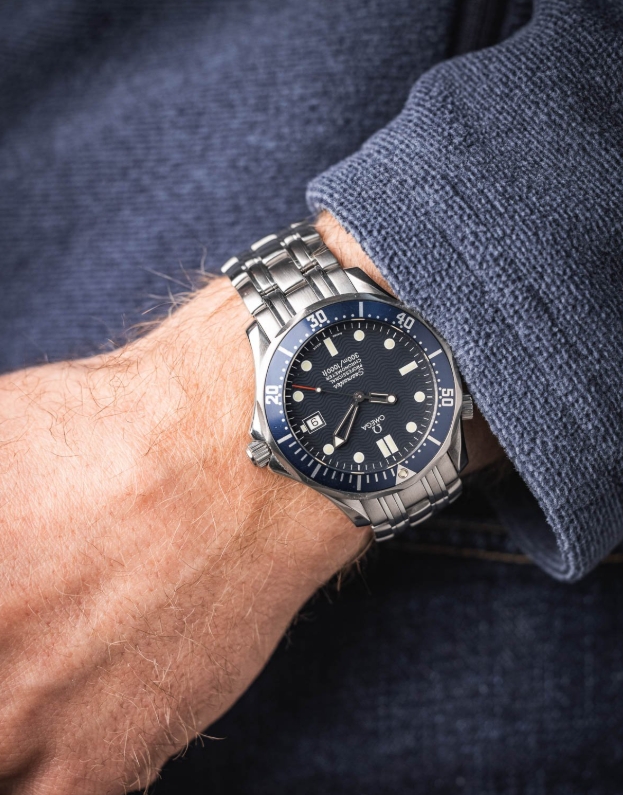
Omega Seamaster Professional 300M 2531.80
If one Omega watch captures the look of the 1990s, the blue Seamaster Professional 300M must be high on the list.
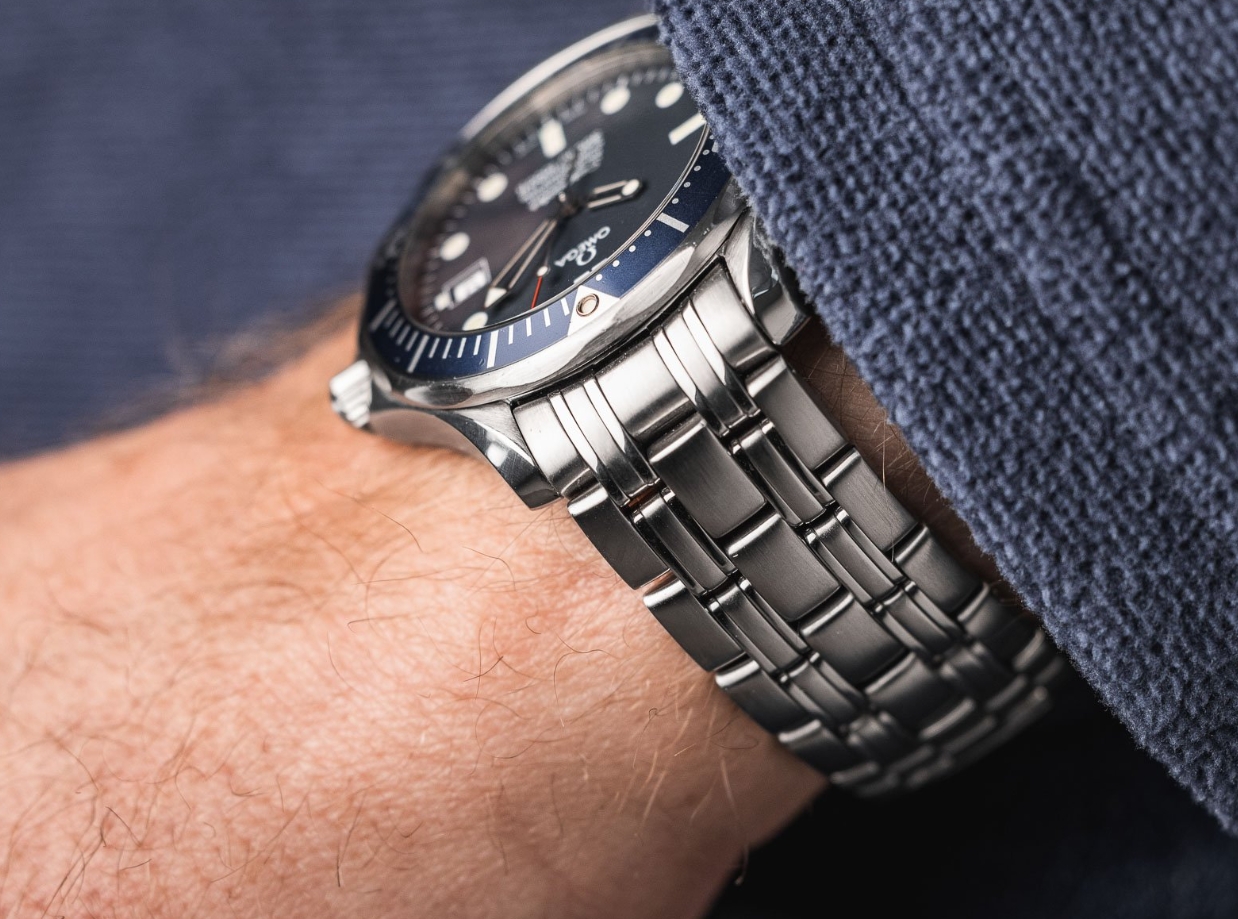
The design arrived at a time when many dive watches still followed fairly traditional formulas. Omega went in another direction. The scalloped bezel, skeletonised hands, blue wave dial and multi-link bracelet gave the Seamaster its own identity immediately.
The automatic reference 2531.80 followed the quartz 2541.80 that appeared on Pierce Brosnan’s wrist in GoldenEye. That Bond connection helped the blue Seamaster become familiar even to people who had little interest in watches.
The original automatic model uses a 41mm stainless steel case. That dimension remains one of the reasons the watch has aged so well. It has enough presence for a sports watch without the oversized feeling that became common later.
For anyone examining a replica version, the dial is where I would start. On cheaper examples the blue can be too bright, the wave pattern too deep or the hour markers too heavy. A better example should keep the dial relatively restrained and preserve the visual balance of the original.
The bracelet matters just as much. The familiar multi-row Seamaster bracelet is visually busy, but that is part of the watch’s character. Poor copies often feel loose or overly polished, whereas a more carefully made version should have a cleaner transition between the case and end links.
A well proportioned Omega Seamaster 300M replica should therefore be judged as a complete watch rather than by the dial alone.
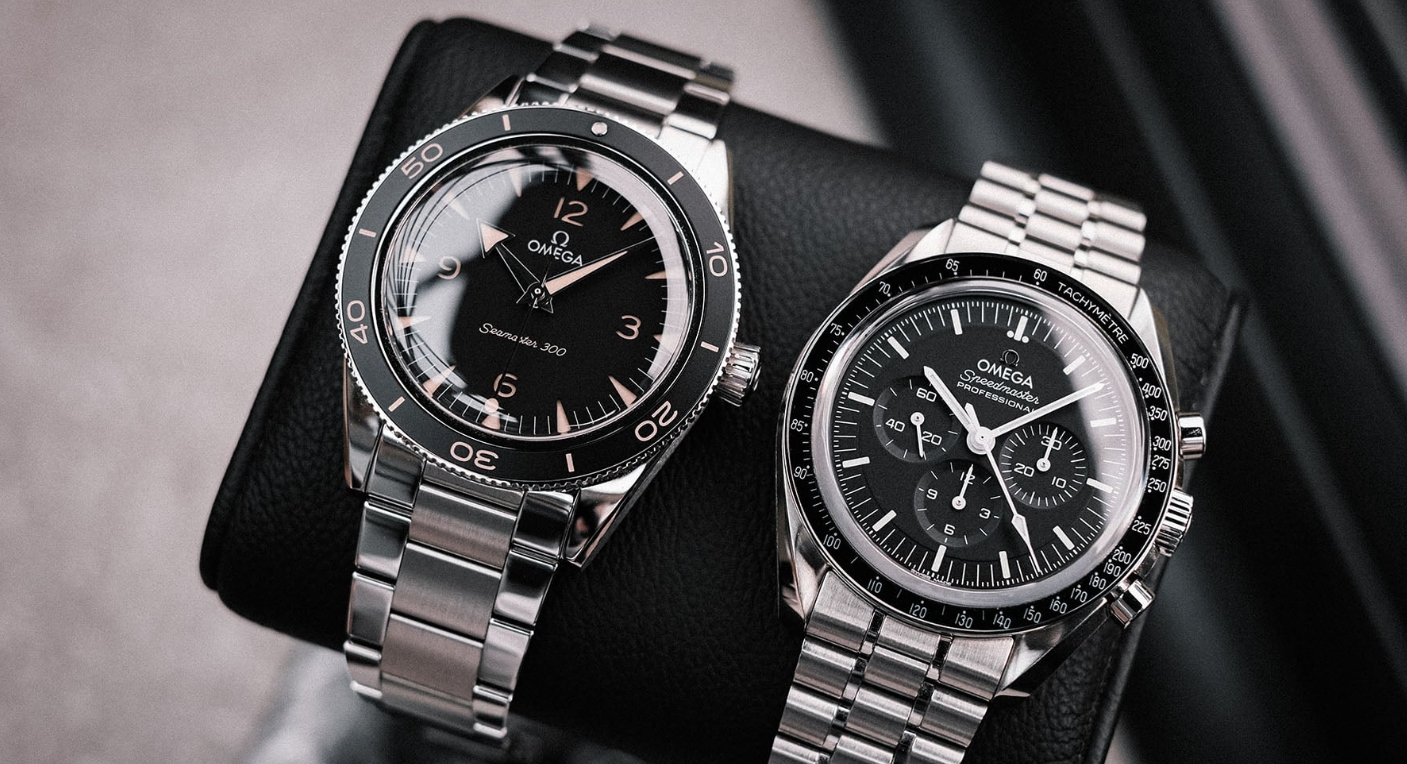
Omega Speedmaster Professional 3570.50
The Speedmaster Professional is almost the opposite of the blue Seamaster. It does not depend on bright colour or an unusual bracelet. Its strength comes from how little the basic visual formula has needed to change.
Reference 3570.50 appeared during the second half of the 1990s and continued for many years afterwards. Its familiar 42mm asymmetric case, black tachymeter bezel, Hesalite crystal and three-register dial make it immediately recognisable as a Moonwatch.
On the original watch, the manually wound calibre 1861 continued the mechanical character that enthusiasts expected from the Speedmaster Professional. A replica obviously should not be confused with the genuine Omega movement, so the more useful comparison is visual rather than mechanical.
Look closely at the spacing of the subdials. This is one of the quickest ways to spot differences between replica grades. When the movement underneath has different dimensions from the original construction, the registers can sit too far towards the centre or too far apart.
The bezel printing is another detail worth checking. The numerals should not feel oversized or unusually thick, while the white hands and hour markers should remain crisp against the black dial.
For readers comparing different versions, our Omega Speedmaster replica watches section provides more examples from across the Speedmaster family.
What continues to make this reference interesting is restraint. A convincing example does not need exaggerated polishing or an unusually glossy dial. In fact, those things usually make the watch look less like the original.
Replica Omega Speedmaster Moonwatch proportions are far more important than decorative finishing alone.
Omega Seamaster 300M GMT 50th Anniversary
The late 1990s Seamaster GMT shows how much Omega could change the personality of the 300M without completely redesigning the case.
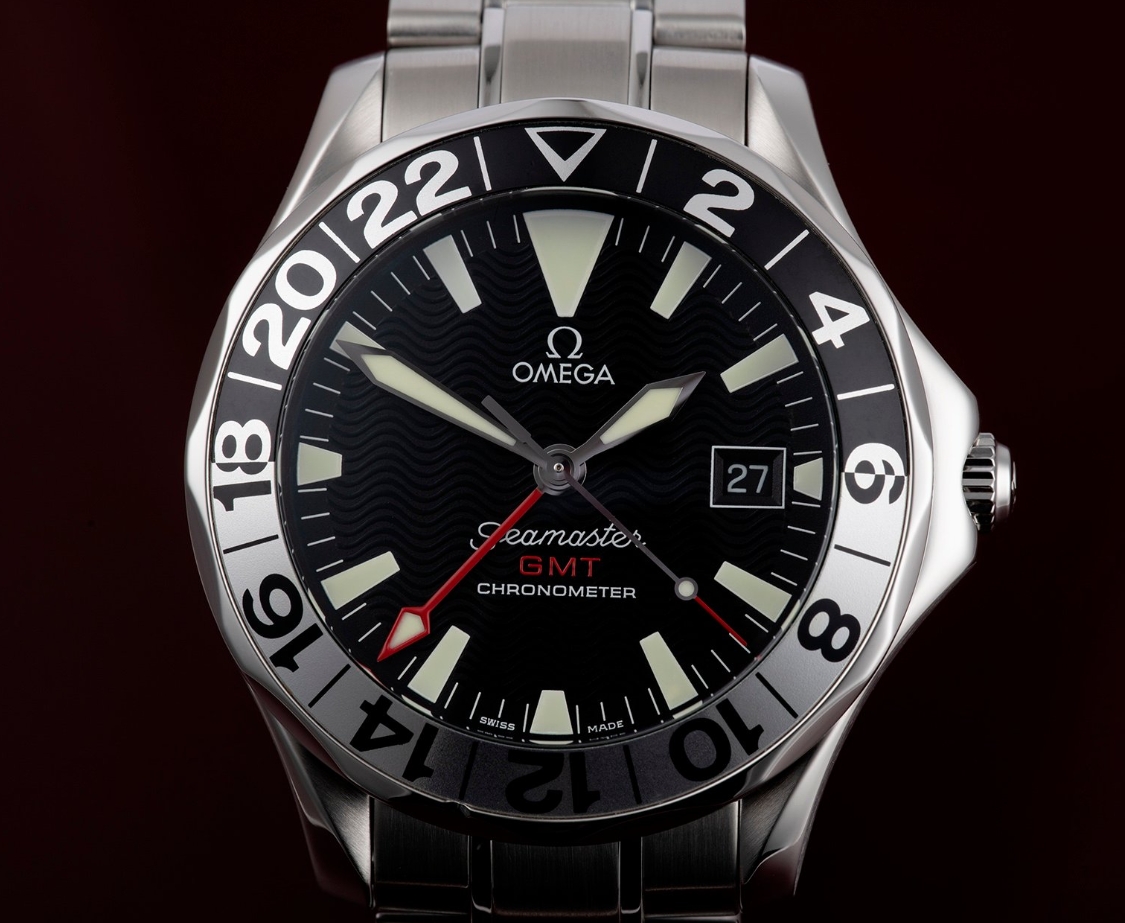
The basic Seamaster shape remains familiar, but the black dial and 24 hour bezel make the watch feel considerably more purposeful than the blue Bond model. Sword style hands also give it a slightly different connection to earlier Seamaster designs.
The GMT hand provides the most obvious flash of colour. Used correctly, the red accent works because almost everything surrounding it is monochrome.
This is where replica versions sometimes lose the character of the original. If the red becomes too bright, the wave texture too obvious or the bezel numerals too large, the watch starts to feel much busier than it should.
Case thickness is another point worth considering. A GMT watch naturally has a more technical appearance, but that does not mean the case should look excessively deep. The original design remains relatively compact by modern sports watch standards.
When comparing examples online, I would pay particular attention to the bezel insert, GMT hand length and the alignment between the bezel markings and dial indices.
Accurate Omega Seamaster GMT replica details tend to reveal themselves in these smaller areas rather than in obvious branding.
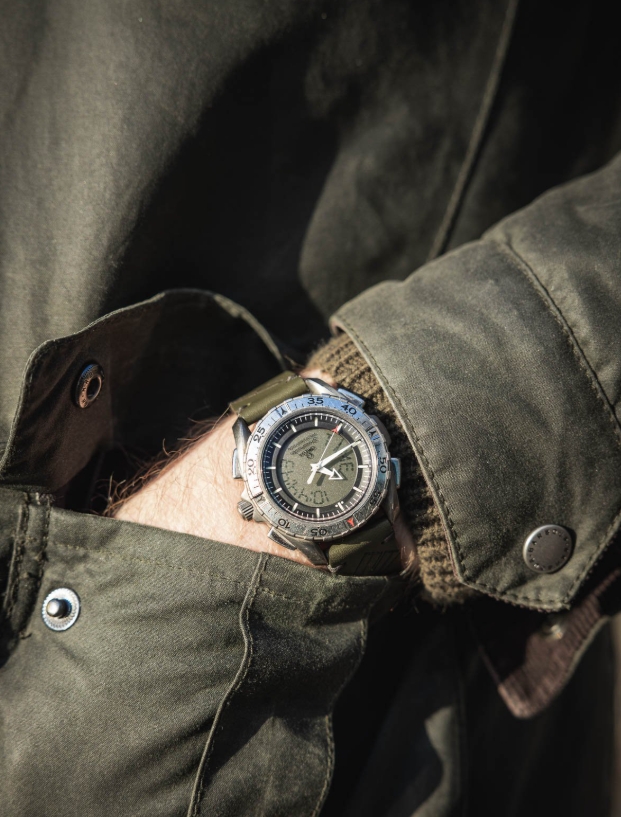
Omega Speedmaster X 33
The Speedmaster X 33 is the odd one in this group, and that is exactly why it deserves to be here.
Introduced in 1998, it combined analogue hands with a digital display and was developed with input from pilots and astronauts. Instead of trying to make another conventional mechanical chronograph, Omega produced something deliberately technical.
The titanium construction was important because the watch looks substantial on paper. In practice, the lighter material keeps it much more wearable than the dimensions might suggest.
Four pushers around the case control the various digital functions, while the central analogue display keeps the time readable at a glance. The result looks unmistakably like a product of its era, but it has developed a following precisely because Omega did not play safe with it.
The X 33 also demonstrates why replica quality cannot be judged using the same checklist for every Omega model.
On a conventional Seamaster, buyers might concentrate on dial printing, bezel action and bracelet finishing. With an X 33 style watch, the case geometry, digital display, pusher placement and titanium-like surface treatment become much more important.
A simplified digital module may reproduce the general appearance without reproducing the original functionality. That difference should be understood clearly rather than hidden behind vague claims about movements or specifications.
High quality Omega X 33 replica construction is therefore as much about getting the unusual case and display layout right as it is about matching the dial.
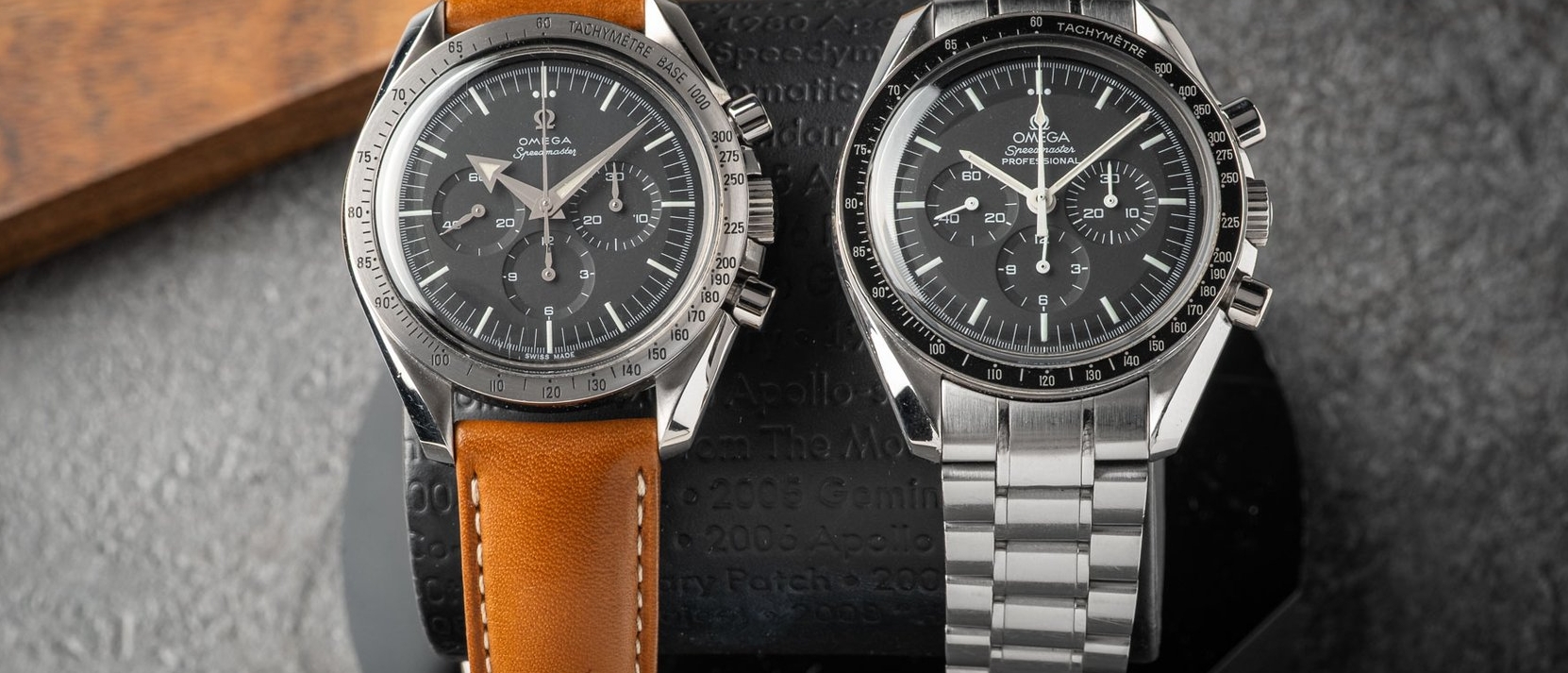
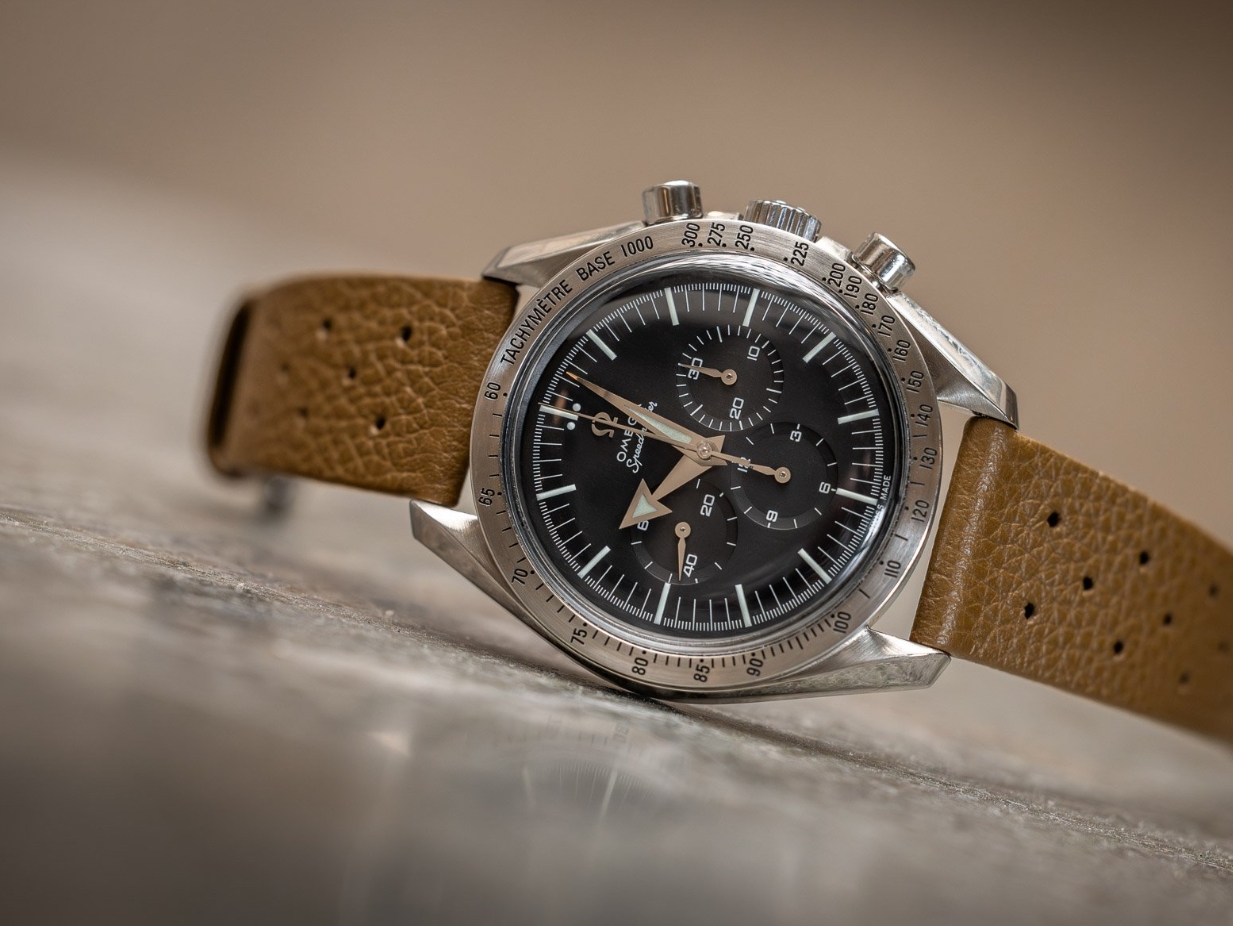
Omega Speedmaster 3594.50
The Speedmaster 3594.50 is particularly interesting because Omega itself originally used the word “Replica” for the model before the terminology was later changed.
In this case, Replica referred to Omega revisiting the appearance of the first Speedmaster from 1957. It was an official Omega watch, not a counterfeit product.
The reference combines the familiar later Speedmaster case with details inspired by the early CK2915, most noticeably the steel bezel and Broad Arrow hands.
That combination gives the watch a character that sits somewhere between vintage and modern. It does not look exactly like a 1950s watch, nor does it look quite like a standard black bezel Moonwatch.
This distinction is important when comparing modern reproductions. Simply fitting Broad Arrow hands to a normal Speedmaster-style case does not necessarily recreate the look convincingly.
The steel bezel needs the right width, the grey-black dial should not appear excessively glossy, and the applied details need to remain subtle. The Broad Arrow hour hand is visually dominant already, so oversized markers can quickly make the dial feel crowded.
A strap also changes the character of this model dramatically. While the bracelet creates a familiar sports-watch appearance, leather brings out more of the mid-century influence behind the design.
1990s Omega Speedmaster replica dial accuracy is especially important on this reference because there are fewer bright colours or decorative elements available to disguise poor proportions.
Why These Five Watches Still Matter
Looking back at these references, what stands out is how varied Omega had become by the end of the decade.
The Seamaster 2531.80 was modern, colourful and closely connected with popular culture. The Speedmaster 3570.50 remained intentionally traditional. The Seamaster GMT added travel functionality without losing the basic 300M identity, while the X 33 looked towards electronic instruments and space travel. The 3594.50 did something different again by revisiting Omega’s earliest Speedmaster design.
That variety is also why it makes little sense to judge every Omega replica using the same broad terms such as “AAA”, “Swiss quality” or “1:1”. Those labels are used very loosely online and do not tell you whether a specific watch actually gets the important details right.
It is more useful to examine what matters for the reference in front of you.
On a Seamaster, look at the bezel shape, helium valve position, dial texture and bracelet. On a Moonwatch, concentrate on the case profile, bezel typography, hand length and subdial spacing. On an X 33, the display and case architecture matter far more.
Choosing an Omega replica watch in the UK by reference specific details is a much better approach than relying on a seller’s quality label alone.
A Note on Original Omega Specifications and Replica Watches
There should also be a clear distinction between the specifications of an authentic Omega and those of a replica.
References such as the Seamaster 2531.80 and Speedmaster 3570.50 have well documented original Omega movements, dimensions and construction. A replica may be visually inspired by those watches but does not automatically share the same calibre, materials, water resistance or manufacturing standards.
Claims about movement origin, sapphire quality or water resistance should therefore be checked individually. Appearance alone is not evidence that the internal construction matches the genuine reference.
This distinction is particularly useful for UK buyers researching older Omega designs because many 1990s references have now become collectible watches in their own right.
Final Thoughts
The 1990s gave Omega several watches that still feel relevant more than three decades later. Some became famous through film, some continued a much older watchmaking story, and others showed a surprisingly experimental side of the company.
For me, the Seamaster 2531.80 is probably the watch that best represents the decade. The blue dial, distinctive bracelet and Bond association are difficult to separate from 1990s Omega.
The Speedmaster 3570.50, however, is arguably the better example of timeless design. Put one beside a later Moonwatch and the family resemblance is immediate.
Whichever style appeals to you, these watches are useful reminders that good replica evaluation comes down to details. Case shape, dial spacing, bracelet construction and overall proportions tell you far more than a collection of impressive sounding marketing terms.
That is what makes these five references worth revisiting today.